

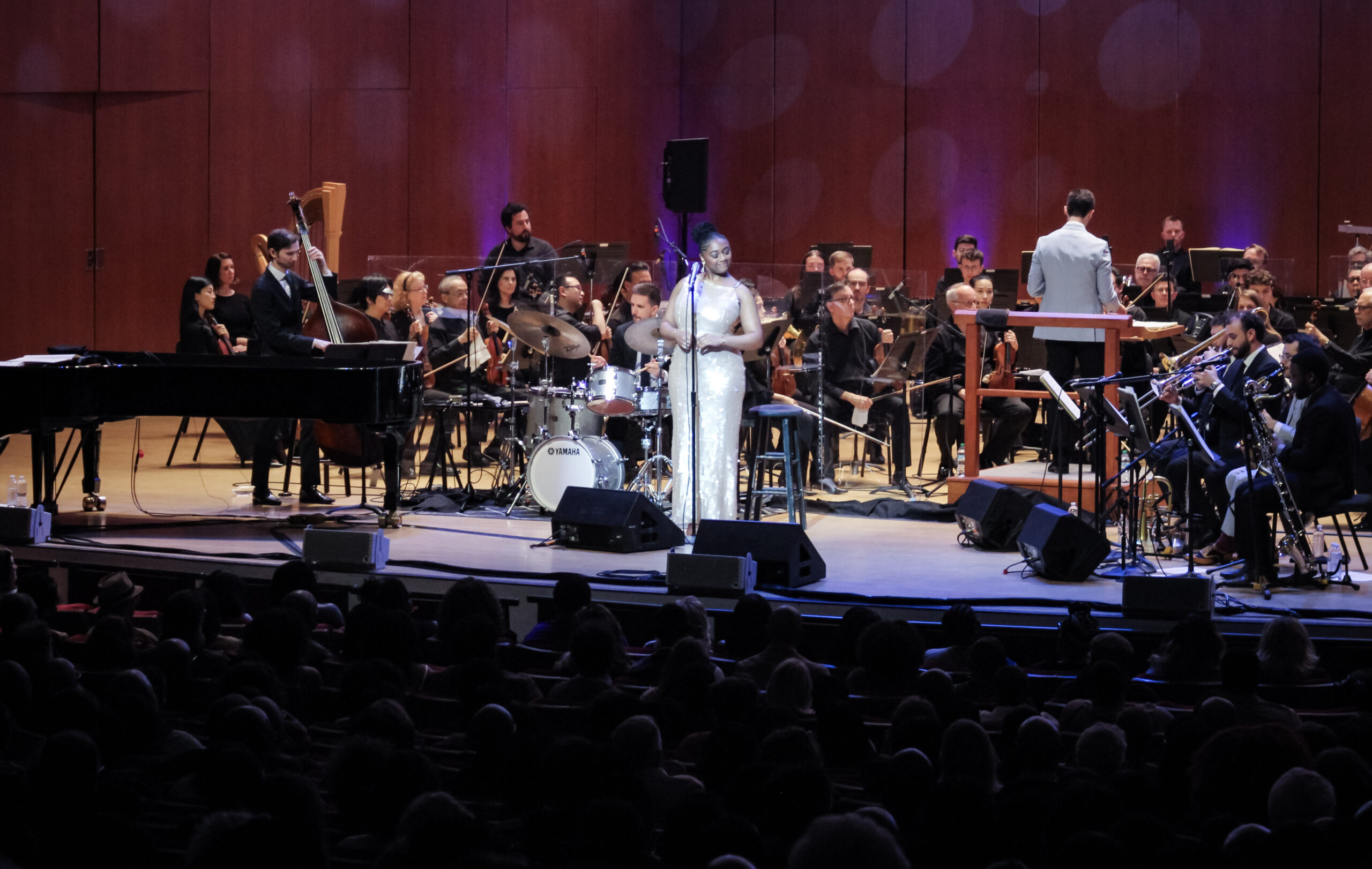
To redefine a word, one has to know its roots. Samara Joy, a six-time Grammy Award-winning jazz artist and NAACP Image Award recipient, planted her feet firmly in the base of the tree of jazz and its interpretations of love from a young age. Surrounded by the love of fans across generations and her parents in the front row, Joy, accompanied by her band and the Atlanta Symphony Orchestra, brought the audience forward by taking them backwards through a journey of appreciation for some of jazz’s greatest legends. Modern arrangements of jazz standards, complemented with original songs, illustrated that words are indeed powerful, but the tone, the feelings, and the actions are what truly imprint themselves upon our hearts and linger awhile in our souls.
Joy prompted the time-traveling trip with an effortless glide across the stage, exuding an air of poise reminiscent of the great Sarah Vaughan. With a single wave of his baton, the conductor reversed the clock, and the raw, silky undertones of Joy fell straight from the 1950s. Her introductory segment, including “Misty”, allowed the audience to know the feeling of a hopeless romantic. The audience sat in awe as she restructured words at will to create dynamic scatting sections ranging from the lowest valley to the highest peak.
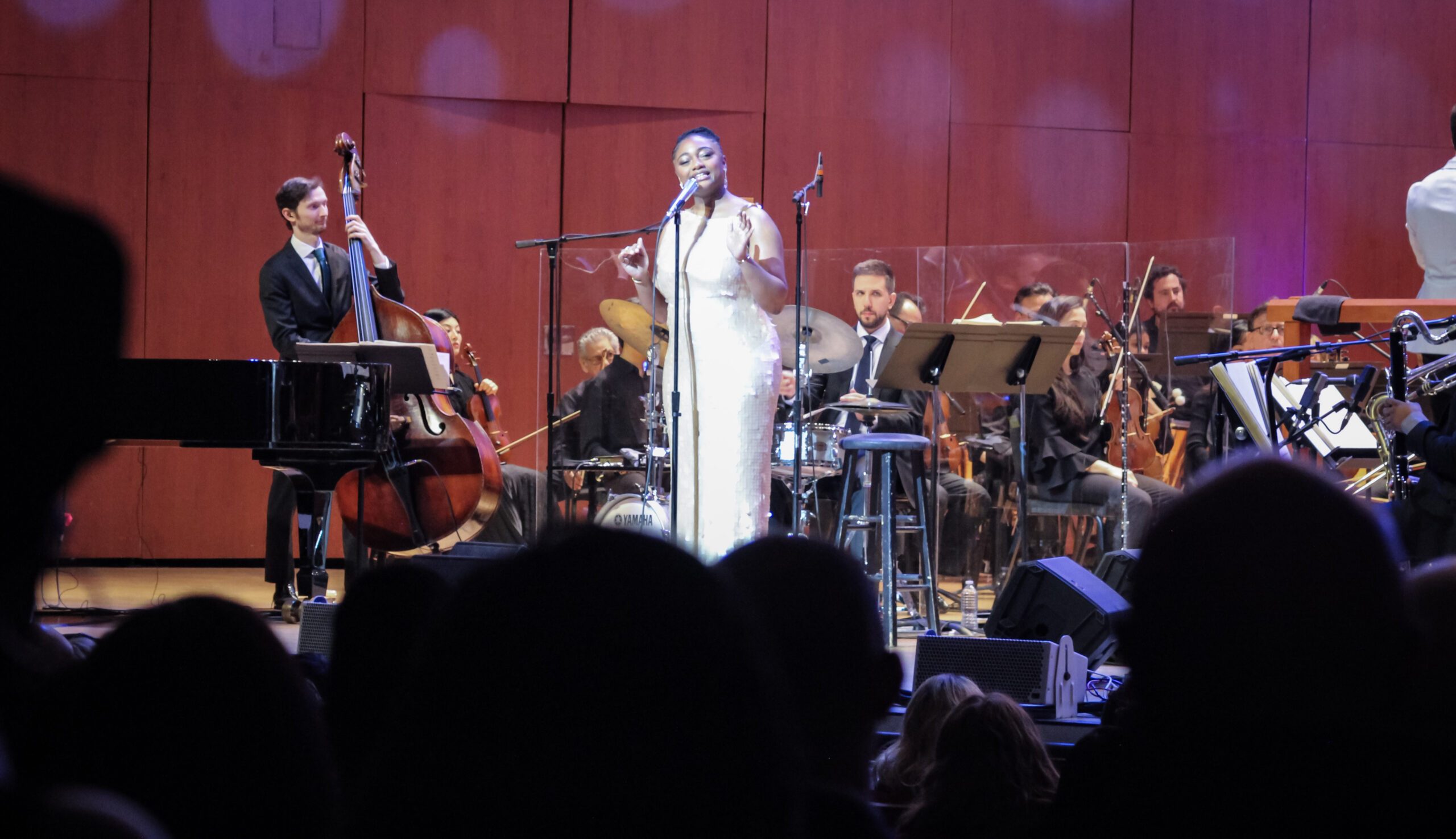
The room fell quiet as the final introductory note lilted through the chairs and into the balcony. In the silence, Joy flipped the narrative with a moment of gratitude for the audience’s time before shattering Vaughn’s notion of love in Portuguese with “Flor de Lis” by Djavan. Everyone held their breath as she told the story of a man whose garden of life was squashed by the love of his life. Each emotion, regardless of the song’s language, hit just as deep, and the audience’s eyes remained locked on this old soul as she crooned the final note.
In this garden of life, Joy, her band, and the Atlanta Symphony Orchestra moved as one. Between each piece, trombonists, trumpeters, and bassists alike engaged in virtuous solo sections and received their due credit for work in each composition. These interactions, however small, highlighted the power of philia and fueled the awe-inspiring power of the set. This idea shook the stage as Joy mentioned the performance of a love song, without words, entitled “The Five Stages of Love”. Including only oohs and aahs in this piece, Joy and her band highlighted how love, at its core, does not need to be spoken to be heard or felt by others as it transcends the labels that have been assigned to it over time.
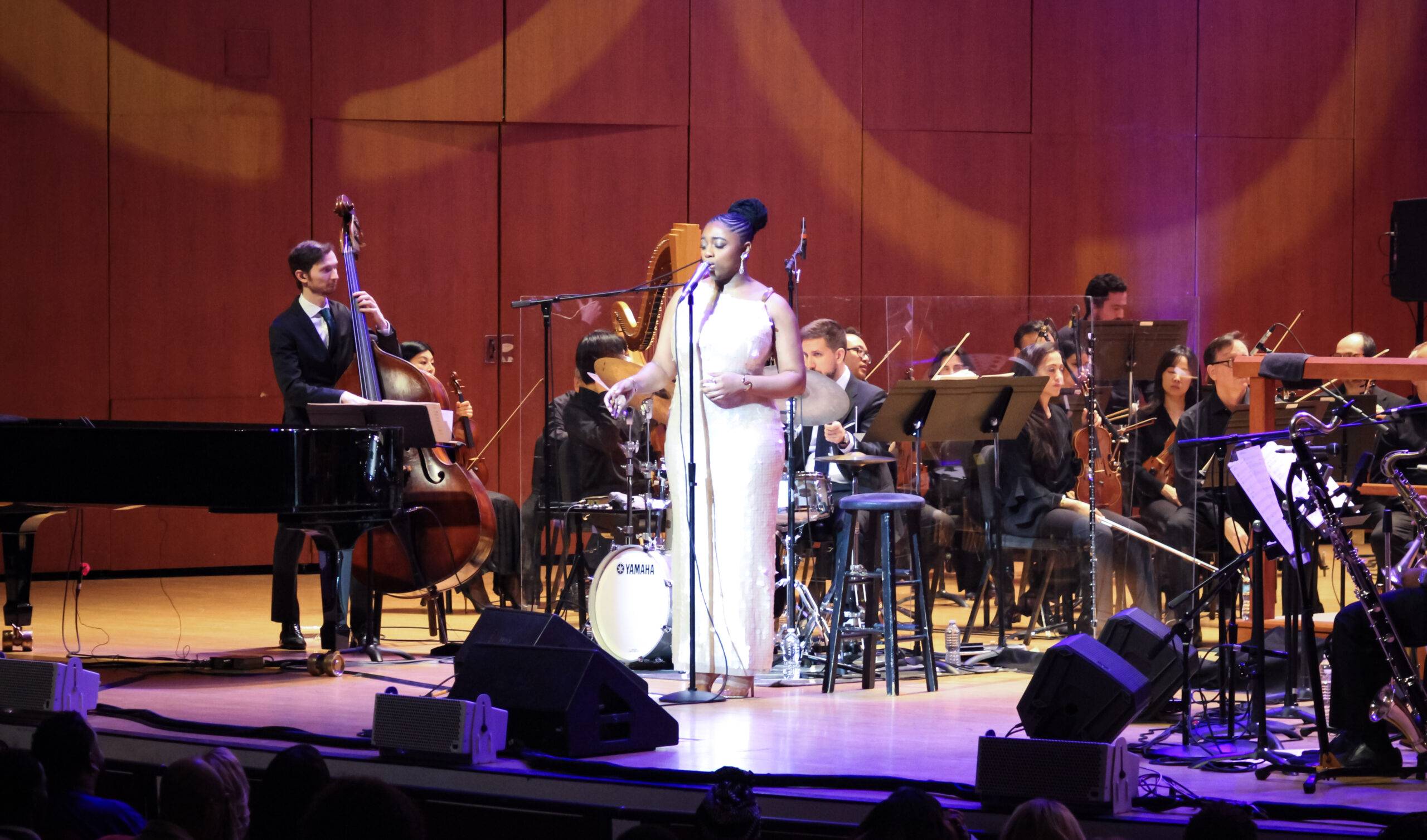
This message about the angles of transcendental love weaved its way through the remainder of the set, rearing its head humorously in songs, such as “Beware My Heart” by Betty Carter, and “Sitting Firmly on The Spirit” with Joy’s final piece on agape, Duke Ellington’s “Come Sunday”. No matter the tune, Joy proved that words are meant to be broken. They are meant to be broken up and broken down. They are even meant to be flipped upside down because, before words, all we had was that feeling and each other. After three standing ovations and a call for an encore, Joy reemerged from backstage with a smile. Yes, she had successfully sung through an enchanting jazz set, but that was only the tip of the iceberg. Echoing through the hall, the applause supported that people don’t remember what you sang, but they remember how you made them feel. Much in the same vein, people may not remember how you speak about love, but they will always remember how you made them feel about love.
Written & Photographed by Genesis Strother